

Why Standard PCs Fail in Harsh Conditions – and What Makes Rugged Systems Essential
Whether deep in a dusty mine, running in the chilling temperatures of a cold storage facility, or enduring the constant spray of an outdoor installation, standard commercial computers simply don’t survive for long. Their delicate components and consumer-grade designs are no match for the brutal realities of extreme industrial settings. Their components are vulnerable to dust, moisture, extreme temperatures, and constant vibrations.
What Challenges Do Industrial PCs Have to Overcome?
Temperature Extremes (Heat and Cold)
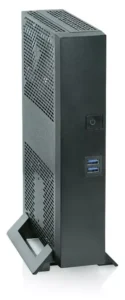 High temperatures can lead to catastrophic overheating, component failure, and drastically reduced lifespans in commercial computers. Conversely, extreme cold can cause battery drain, sluggish performance, and material brittleness. Industrial systems, however, are specifically engineered to operate within wide temperature ranges, often featuring designs that allow them to function flawlessly from sub-zero conditions to scorching heat. For instance, many of our Embedded Box PCs, such as the ICOM-SC series, are designed with passive cooling options, ensuring stable operation without the vulnerabilities of fans.
Dust and Particulates
Dust ingress is a silent assassin for standard computers, blocking crucial fans, leading to overheating, promoting corrosion, and causing mechanical failures. Industries like manufacturing, agriculture, and mining are particularly susceptible to this issue. Industrial systems combat this with superior ingress protection (IP) ratings, signifying their resistance to dust. Products like the PPC2041 Panel PC offer IP66/IP69K-rated designs, guaranteeing a sealed enclosure against dust and high-pressure water jets.
The Danger of Water and Moisture
Water ingress on electronic components can result in immediate short circuits and long-term corrosion. Environments such as food processing plants, outdoor installations, and marine applications frequently expose equipment to moisture. Our industrial systems feature water-resistant and even waterproof designs, with high IP ratings, safeguarding against such damage. The stainless steel enclosure of the PPC2041 further enhances its resilience in wash-down environments.
Other Hazardous Environmental Effects
Beyond temperature, dust, and water, industrial settings present other dangers including vibrations, shocks, humidity, corrosive substances, and electromagnetic interference (EMI). Rugged industrial systems are inherently built to withstand these additional stresses through robust construction, vibration dampening, and effective shielding, ensuring data integrity and operational stability.
How Industrial Systems Are Built to Last
The resilience of industrial computers comes from their hi-spec design and construction.
Rugged Components
Built with industrial-grade components, these PCs often include solid-state drives (SSDs) for superior shock and vibration resistance—ideal for mobile or machinery-integrated systems.
Durable Enclosures & Fanless Cooling
 The durable materials, such as aluminum and steel, used in industrial system enclosures provide formidable physical protection. Specialised cooling systems, often fanless, rely on heat pipes and advanced thermal management to dissipate heat efficiently without drawing in contaminants. This fanless design, seen in many of the ICOM-SC Embedded Box PCs and KBox A-151-RPL systems, is crucial for dusty environments and customers who need silent operation. IP ratings are paramount here, ensuring the enclosure is sealed against environmental threats.
Vibration and Shock Resistance
Industrial systems are engineered with design features that absorb and mitigate the impact of vibrations and shocks common in industrial settings, including secure internal mounting and robust connections.
Extended Lifespan and Reliability
A key differentiator for industrial systems is their significantly longer product life cycles compared to standard consumer PCs. This longevity, exemplified by products with long-term availability like those found in our range, reduces the frequency of replacements and minimises costly downtime in critical industrial applications. The focus is always on unwavering reliability and continuous operation.
Applications in Extreme Environments
 The versatility of rugged industrial systems makes them indispensable across various demanding sectors:
- Manufacturing: Deployed on dusty factory floors, controlling automated assembly lines with fluctuating temperatures, and managing control systems exposed to constant vibrations.
- Oil & Gas: Critical for offshore platforms facing saltwater and extreme temperatures, or in remote drilling operations battling dust and severe weather.
- Transportation: Powering vehicle-mounted systems that endure constant vibrations and wide temperature swings, or controlling railway signaling systems exposed to dust and the elements.
- Agriculture: Essential for outdoor monitoring systems that must withstand dust, water, and significant temperature variations.
- Food Processing: Crucial in wash-down environments that demand water and dust resistance, as well as maintaining stability in temperature-controlled storage facilities.
Why Choose Industrial Computers’ Industrial Systems?
At ICL Industrial Computers, we specialise in rugged solutions engineered for performance and reliability in extreme environments. Our range includes:
- ICOM-SC Embedded Box PCs – Ultra-compact and fanless
- ICOM2517 Rackmount PCs – High-performance and rack-ready
- TBL1110W Rugged Tablets – Portable, waterproof, and impact-resistant
Key features:
- Wide operating temperature ranges
- High IP ratings for dust and water protection
- Fanless designs for silent, low-maintenance operation
- Long-term availability and dedicated technical support
Explore our comprehensive range of Industrial Systems to find the perfect solution for your demanding environment. You can explore our products by clicking here or contact our expert team to discuss your specific requirements.