
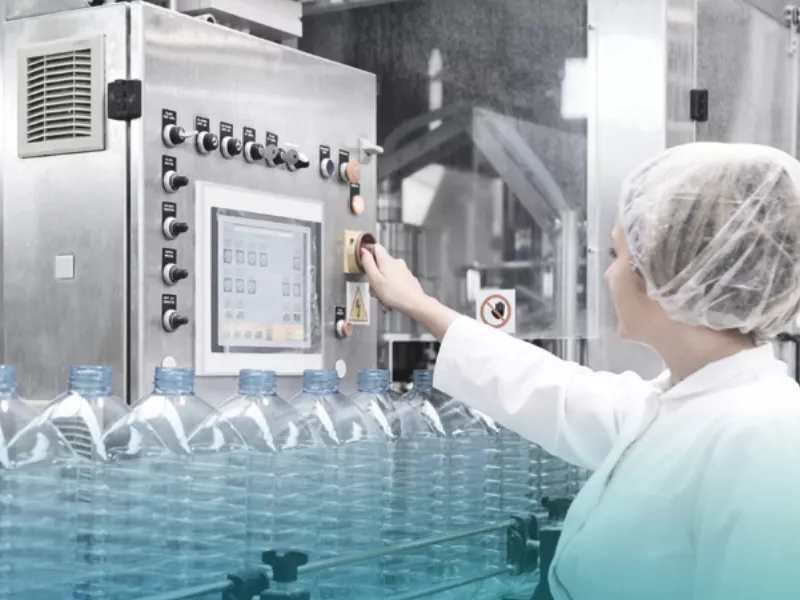
Hygiene is a top priority in the food and pharmaceutical industries, as any risk of product contamination must be ruled out to protect consumer health. This extends beyond just machinery to the computers and control systems used throughout the production chain. These devices, which are essential for process visualisation and quality control, must be designed to meet stringent hygienic requirements.
Key Regulatory and Design Considerations
Numerous regulations and standards govern hygiene in these industries, including:
- Regulation (EC) No. 852/2004 – This requires that equipment in contact with food is constructed and maintained to minimise the risk of contamination and is easy to clean and disinfect.
- Regulation (EC) No 1935/2004 – This specifies that materials and articles in contact with food must be inert and not release substances that could impair food safety or quality.
- Standards like DIN EN 1672-2 and EHEDG guidelines – These provide detailed criteria for hygienic design, including material selection and functional requirements.
To comply with these, computers and operating units used on the machine floor must withstand harsh cleaning procedures, including high-pressure washdowns, and be designed to prevent the build-up of contaminants.
The Role of IP Ratings and Materials
One of the most important features for a computer in these environments is its protection class, defined by its IP (Ingress Protection) rating. Devices with an IP69K rating are specifically designed for these demanding conditions. The 6 signifies that the device is completely dust-tight, while the 9K indicates protection against water ingress from high-pressure and high-temperature steam jet cleaning.
Proper material selection is also critical. Stainless steel of class 1.4301 is a proven material as it’s resistant to water, steam, humidity, and food acids. Its polished, smooth surface is easy to clean, and it can be formed using a deep-drawing process, which avoids weak points like welds that could harbour dirt and germs.
Hygienic Design Features
The overall design of the computer is crucial for its hygiene. A seamless, single-piece housing with minimal joints or crevices is essential to stop dirt and residue from sticking. For example, our FlatClient HYG Panel PC uses a deep-drawn rear housing with gentle radii and inclined surfaces to facilitate easy cleaning.
The display surface is also designed for hygiene and safety. A seamless, anti-reflective, and shatterproof front glass ensures optimal readability and is easy to clean. Advanced touch screen technology can even distinguish between legitimate touches and accidental contact from water droplets or a person’s palm, improving operational safety and comfort.
Advancing Production with Smart Systems
In the age of Industry 4.0, hygienic computers enable smart process visualisation and paperless manufacturing. By integrating with control systems, they allow for:
- Centralised management of work plans and formulations.
- Automated data acquisition for a transparent and documented production process.
- Real-time line and production visualisation.
- Enhanced traceability of all goods and products.
This shift to intelligent, hygienic systems like the combination of the FlatClient HYG and FabEagle®LC software helps improve transparency, increase productivity, and ensure the highest standards of safety in food and pharmaceutical production.
Maintain uncompromising safety standards in your production environment.
If you operate in the food or pharmaceutical sector, your computers must be IP69K rated and feature hygienic design to withstand rigorous cleaning and prevent contamination. Transition to intelligent, hygienic systems like our FlatClient HYG Panel PC to improve traceability, boost productivity, and ensure compliance. Contact us today to explore the right hygienic computing solution for your facility.